Showing posts with label NWHC Wildlife Health Bulletins. Show all posts

December 13, 2012

12 Days of WHER and Today's Wildlife Disease News Stories

Twelve Days of the Wildlife Health Event Reporter 
Day Three: Searching for that Perfect Gift? (That would be WHER data of course!)

As we have mentioned the Wildlife Health Event Reporter (WHER), www.wher.org, is an online system that anyone can use to report their sightings of injured/sick/dead wild animals and receive alerts about new reports. But if everyone is contributing reporters to WHER, you probably want to know what kind of data gifts can WHER give back to you?

 
With your WHER account (which, of course, as a Digest reader who cares about wildlife health issues, you already have) you can take advantage of WHER's search function. You can combine options from over 10 different search filters (e.g. by date, species, and/or location) to create your own data wish list. The results from your search can be viewed online on a map or in a table. In addition, you can download your data package into an excel spreadsheet to review on your own computer, pull into mapping applications, and other packages.


Go to WHER and find your gift of WHER data today! The perfect gift for the wildlife enthusiast who has everything! 


TOP STORIES

Stone Soup for Thanksgiving: Understanding Bird Disease through Citizen Science

When somebody opens their front door to pick up the morning newspaper and sees a dead bird below their hedge, they get curious for answers. As soon as they stoop down for a closer look, an Indiana Jones adventure unfolds within the confines of their backyard. Was it poison, disease, predation, starvation, old age? Is this a fluke or widespread plague? Perhaps dead birds like this one are widely scattered across a country. But, if so, what sort of scientific method could find answers to what happened to them all?

When my colleagues and I carry out research using citizen science methods, ... we have a big blank spreadsheet and curious folk are enticed to each add their observations, ultimately creating a robust database with observations from across a continent.

Through citizen science I study healthy birds, but several of my colleagues focus on the sick and dying ones.  ...a research team led by Becki Lawson, a veterinarian and ecologist, reported a new strain of avian pox spreading in a common backyard bird in Great Britain. Citizen science participation was pivotal to tracking the outbreak, unraveling its mysteries, and informing localized studies.
As we've been advocating through our series, Twelve Days of the Wildlife Health Event Reporter (WHER), wildlife health observations reported by the everyday citizen are valuable. Each of your reports contributes to a better understanding of wildlife disease ecology.

Get signed up today at www.wher.org!  Join the effort to spot possible health threats in your community!
Science American - blogs.scienceamerican.com
21 Nov 2012
C Cooper


More News on Help from Citizen Scientists

Emerging virus in raccoons may provide cancer clues

Rare brain tumors emerging among raccoons in Northern California and Oregon may be linked to a previously unidentified virus discovered by a team of researchers, led by scientists from the University of California, Davis. Their findings, published today in the journal Emerging Infectious Diseases, could lead to a better understanding of how viruses can cause cancer in animals and humans.

...The common factor, found in all of the tumors, was a newly described virus, dubbed raccoon polyomavirus. Researchers suspect this virus contributes to tumor formation.

Polyomaviruses, which are prevalent but rarely cause cancer, do not typically cross from one species to another, so the outbreak is not expected to spread to people or other animals.

UC Davis News and Information - news.ucdavis.edu
12 Dec 2012


Wildlife Health Bulletin: Cyanobacterial Disease Killing Coral on Kauai, Hawaii

An unusual coral mortality event on the north shore of the Hawaiian island of Kauai is currently being investigated. The USGS National Wildlife Health Center Honolulu Field Station (HFS) is collaborating with the Hawaii Institute of Marine Biology at the University of Hawaii in this coral disease investigation. Scientists have visited two different sites, which are near Hanalei Bay, multiple times to take samples and document extent of the damage. Samples from the lesions have been tested and scientists have determined that a cyanobacterial infection is associated with tissue loss and death. At both sites, coral reefs were heavily degraded with overgrowth of turf algae as well as sediment deposits. See photos at Cyanobacterial Disease in Montipora Coral.

This coral disease outbreak is the first instance where cyanobacterial disease on a large scale has been documented in corals in Hawaii. Lesions are covering 10 – 80 percent of affected colonies. The consistent presentation of gross and microscopic lesions and the absence of this disease in corals elsewhere in Hawaii indicate that this outbreak is an epizootic currently limited to the north shore of Kauai. The HFS has archived tissues of a similar disease in Hanalei Bay from 2009 indicating that cyanobacterial disease in corals on north Kauai has been around since that time.

National Wildlife Health Center - www.nwhc.usgs.gov
07 Dec 2012


Reported Wildlife Mortality Events to the USGS National Wildlife Health Center Updated


USGS and a network of partners across the country work on documenting wildlife mortality events in order to provide timely and accurate information on locations, species and causes of death.

This information was updated on December 6, 2012 on the USGS National Wildlife Health Center web page, New and Ongoing Wildlife Mortality Events Nationwide.

Quarterly Mortality Reports are also available from this page. These reports go back to 1995.

USGS National Wildlife Health Center
06 Dec 2012
Location:US


OTHER WILDLIFE HEALTH RELATED NEWS
Marine Wildlife Health News
Chronic Wasting Disease News
White-Nose Syndrome News
One Health News Corner
Huh?! That's Interesting!
Elk bones tell stories of life, death, and habitat use at Yellowstone National Park

It Ain't All Bad News
Bat fan visits Boston to learn about disease: Population dwindling as result of fungus

September 11, 2012

Today's Wildlife Disease News Stories

TOP STORIES

Wildlife Health Bulletin - Hemorrhagic Disease in Wild Ruminants

This Bulletin provides a current update on hemorrhagic disease (HD) in wild ruminants. HD is a viral disease caused by either epizootic hemorrhagic disease virus (EHDV) or bluetongue virus (BTV); these Orbiviruses are related, but are genetically distinct. They are spread by biting midges in the genus Culicoides, resulting in seasonal occurrence of the disease. The North American species most affected is the white-tailed deer, but mortality can occur in mule deer, black-tailed deer, elk, bighorn sheep, and pronghorn antelope. The viruses do not infect humans, but may cause
disease of varying severity in sheep and cattle.

... Outbreaks in 2012 have the potential to be more severe because widespread drought and high temperatures cause lower water levels creating more muddy areas favored by the vectors. In addition, herd immunity to HD viruses may be low because five years has lapsed since the last large outbreak. The Southeastern Cooperative Wildlife Disease Study (SCWDS) at the University of Georgia has received HD reports from much of the United States this year and has confirmed deer mortality due to these virus serotypes: EHDV-1, EHDV-2, EHDV-6, or BTV-13 infection in 15 states.

USGS National Wildlife Health Center - www.nwhc.gov
07 Sep 2012
JS Sleeman, USGS National Wildlife Health Center and J Fischer, Southeastern Cooperative Wildlife Disease Study


More Epizootic Hemorrhagic Disease News
>>> MDARD warns of EHD in domestic deer facilities [Maryland, USA]
>>> Deer found dead in Warren County could be latest victims of hemorrhagic virus [Harmony Township, New Jersey, USA - Map It ]
>>> Deer Killing Disease Now in 17 Counties [View latest cases reported in Michigan, USA on the Disease News Map ]


Peru Dolphin and Pelican Mortality 2012: IUCN Wildlife Health Specialist Group Report

Dolphin mortality has been reported along the Northern Peruvian coast (over roughly a 200km area around Tumbes, Piura, Lambayeque and La Libertad regions) since January 2012. Species affected are Delphinus capensis and Phocoena spinipinnis. Isolated reports also mention Tursiops truncatus.

...The die-offs have sparked widespread speculation about the causes, but none have been scientifically confirmed. Necropsy analysis showed no signs of starvation, respiratory, digestive or neurological disease.

...Peru has also experienced avian die-offs this autumn along its northern coast. Pelicans (Pelecanus thagus) have been the most affected species, followed by the Peruvian booby (Sula variegata) and cormorants (Phalacrocorax bouganvillii). The National Service of Animal Health (SENASA at Ministry of Agriculture) collected and analyzed pelican and booby samples at the 4 affected regions: Piura, Tumbes, Lambayeque and La Libertad and reported the finding of Pasteurella multocida.

...On August 7th , a new stranding of up to 60 sea lions on Puerto Pizarro, Tumbes was announced by the media. A quick response of the government supported by local NGOs confirmed the presence of only 12 carcasses; samples were collected by IMARPE and are currently under analysis.

IUCN Wildlife Health Specialist Group - iucn-whsg.org
No date provided
Report courtesy of the Australian Wildlife Health Network

>>> FULL ARTICLE


Media release: Lake Hume fish investigation rules out infection

An extensive investigation into sick redfin found in Lake Hume earlier this year has ruled out an infection as the cause of their condition. Over the winter months, recreational anglers at Lake Hume reported a number of redfin in their catches affected by a gill and skin condition.

...DPI Director of Fisheries Management Travis Dowling said the investigation had established dermatitis and chronic branchitis as the cause – not a viral infection.

Dept. of Primary Industries - www.dpi.vic.gov.au
31 Aug 2012
Location: Lake Hume, Australia - Map It
Story courtesy of the Australian Wildlife Health Network

>>> FULL ARTICLE


OTHER WILDLIFE HEALTH RELATED NEWS
News about Impact of Isaac Hurricane on Wildlife
West Nile Virus
One Health News Corner
It Ain't All Bad News

June 6, 2012

Wildlife Disease Journal Digest

Browse complete Digest publication library here.

Parasite diversity and coinfection determine pathogen infection success and host fitness
PNAS. 2012 Jun 05; 109(23): 9006-9011. doi: 10.1073/pnas.1201790109
PRJ Johnson and JT Hoverman

Land Use and Wetland Spatial Position Jointly Determine Amphibian Parasite Communities
EcoHealth. 2011; 8(4): 485-500, DOI: 10.1007/s10393-011-0715-9
RB Hartson et al.

EcoHealth and the Influenza A/H5N1 Dual Use Issue

EcoHealth. 2012;[Epub ahead of print]. DOI: 10.1007/s10393-012-0768-4
M Jeggo et al.

Questionable Diagnosis, Ineffective Treatment [Book review]
EcoHealth. 2012; [Epub ahead of print]. DOI: 10.1007/s10393-012-0767-5
H Frumkin

Patterns of Stranding and Mortality in Common Seals (Phoca vitulina) and Grey Seals (Halichoerus grypus) in The Netherlands between 1979 and 2008
Journal of Comparative Pathology. 2012; [Epub ahead of print]
N Osinga et al.

Recovery Potential of a Western Lowland Gorilla Population following a Major Ebola Outbreak: Results from a Ten Year Study
PLoS ONE. 2012; 7(5): e37106. doi:10.1371/journal.pone.0037106
C Genton et al.

Phylogenetic analysis of rabbit hemorrhagic disease virus in China and the antigenic variation of new strains
Archives of Virology. 2012; [Epub ahead of print]. doi: 10.1007/s00705-012-1340-9
X Wang et al.

Bats host major mammalian paramyxoviruses
Nature Communications. 2012 April; 3(796). doi:10.1038/ncomms1796
JF Dreler et al.

Partitioning of Cd and Pb in the blood of European blackbirds (Turdus merula) from a smelter contaminated site and use for biomonitoring
Chemosphere. 2012 Jun;87(11):1368-73. Epub 2012 Mar 6. doi:10.1016/j.chemosphere.2012.02.031
M Coeurdassier et al.

NWHC Plan for Avian Influenza Surveillance of Wild Birds [pdf]
Wildlife Health Bulletin. 2012 May 9; 2012-03: 1-2
USGS National Wildlife Health Center

Seasonal and biogeographical patterns of gastrointestinal parasites in large carnivores: wolves in a coastal archipelago
Parasitology. 2012 May;139(6):781-90. Epub 2012 Feb 6.
HM Bryan et al.

Variations of transcript profiles between sea otters Enhydra lutris from Prince William Sound, Alaska, and clinically normal reference otters
Marine Ecology Progress Series. 2012;451: 201-212
AK Miles et al.

Detergents modify proteinase K resistance of PrP Sc in different transmissible spongiform encephalopathies (TSEs)
Vet Microbiol. 2012 May 25;157(1-2):23-31. Epub 2011 Dec 14.
J Breyer et al.

April 4, 2012

Wildlife Disease Journal Digest

Browse complete Digest publication library here.


Cross-seasonal patterns of avian influenza virus in breeding and wintering migratory birds: a flyway perspective
Vector Borne Zoonotic Dis. 2012 Mar;12(3):243-53. Epub 2011 Oct 13. doi:10.1089/vbz.2010.0246.
NJ Hill et al.

Implications and challenges of tuberculosis in wildlife ungulates in Portugal: a molecular epidemiology perspective
Res Vet Sci. 2012 Apr;92(2):225-35. Epub 2011 Apr 2.
MV Cunha et al.

The survey of wild birds for West Nile virus in Poland
Pol J Vet Sci. 2011;14(4):573-7.
JS Niczyporuk et al.

Public health surveillance and infectious disease detection
Biosecur Bioterror. 2012 Mar;10(1):6-16. doi:10.1089/bsp.2011.0088.
SS Morse

Transmission of infectious diseases en route to habitat hotspots
PLoS One. 2012;7(2):e31290. Epub 2012 Feb 20.  doi:10.1371/journal.pone.0031290
J Benavides et al.

Viral replication, persistence in water and genetic characterization of two influenza A viruses isolated from surface lake water
PLoS One. 2011;6(10):e26566. Epub 2011 Oct 20.doi:10.1371/journal.pone.0026566
C Lebarbenchon et al.


Respiratory tract versus cloacal sampling of migratory ducks for influenza A viruses: are both ends relevant?
Influenza Other Respi Viruses. 2012 Mar 28. doi: 10.1111/j.1750-2659.2012.00359.x. [Epub ahead of print]
S Krauss et al.

Emerging Infectious Diseases - April 2012
Volume 18, Number 4

Animal Health Surveillance Quarterly Report: Newsletter of Australia's National Animal Health Information System - December 2011
Volume 16, Issue 4
Australia Wildlife Health Network....p 8-9


The role of genetics in chronic wasting disease of North American cervids
Prion. 2012 Apr 1;6(2). [Epub ahead of print]
SJ Robinson

Update on Ranavirus in Amphibians and Reptiles [pdf]
Wildlife Health Bulletin. 2012 Mar 23; 2012-02: 1-3
USGS National Wildlife Health Center

Prion. 2011 Mar; 6(1)
Biodiversity of emerging pathogenic and invasive fungi in plants, animals and humans in Italy
Plant Biosystems. 2011; 145(4): Epub. doi:10.1080/11263504.2011.633118
AM Picco et al.

Genetic analysis of beak and feather disease virus isolated from captive psittacine birds in Thailand [pdf HERE]
Southeast Asian J Trop Med Public Health. 2011 Jul;42(4):851-8.
L Sariya et al

Survival and population size of a resident bird species are declining as temperature increases [West Nile virus]
Journal of Animal Ecology. 2012 Mar; 81(2): 352–363. doi:10.1111/j.1365-2656.2011.01918.x
L Santisteban et al.

February 1, 2012

Wildlife Disease Journal Digest

Browse complete Digest publication library here.

White-Nose Syndrome (WNS) Updates [pdf]
USGS National Wildlife Health Center: Wildlife Health Bulletin 2012-01

Investigating the role of bats in emerging zoonoses: Balancing ecology, conservation and public health interests [pdf]. 2011. FAO Animal Production and Health Manual No. 12. Rome.
Food and Agriculture Organisation of the United Nations.
Edited by S.H. Newman, H.E. Field, C.E. de Jong and J.H. Epstein

A Forensic Investigation Into the Etiology of Bat Mortality at a Wind Farm: Barotrauma or Traumatic Injury?
Veterinary Pathology. 2012; [Epub ahead of print] doi: 10.1177/0300985812436745
KE Rollins et al.

Complete sequence of a viral nervous necrosis virus (NNV) isolated from red-spotted grouper (Epinephelus akaara) in China
Archives of Virology. 2012; [Epub ahead of print] doi: 10.1007/s00705-011-1187-5
H Liu et al.

Serological Assays to Discriminate Rabbit Haemorrhagic Disease Virus from Australian Non-pathogenic Rabbit Calicivirus

Veterinary Microbiology. 2012; [Epub ahead of print] doi: 10.1016/j.vetmic.2012.01.018
J Liu et al.

Journal of Wildlife Management - February 2012
Volume 46, Issue 02

Wildlife Society Bulletin - December 2011
Volume 35, Issue 04

Wildlife Research - December 2011
Volume 38, Number 8

UC Davis Wildlife Health Center Update - December 2011

The effects of radioactive pollution on the dynamics of infectious diseases in wildlife
J Environ Radioact. 2012 Jan 19. [Epub ahead of print]
NJ Morley

Microbial diversity determines the invasion of soil by a bacterial pathogen
PNAS. 2012 Jan 24; 109(4): 1159-1164. doi: 10.1073/pnas.1109326109
JD van Elsas et al.

Soil-mediated prion transmission: Is local soil-type a key determinant of prion disease incidence?
Chemosphere. 2012 Jan 20. [Epub ahead of print]
SE Saunders et al.

Sensitivity of protein misfolding cyclic amplification vs. immunohistochemistry in antemortem detection of CWD infection
J Gen Virol. 2012 Jan 25. [Epub ahead of print]. doi:
NJ Haley et al.

Role of Water Fleas (Daphnia magna) in the Accumulation of Avian Influenza Viruses from the Surrounding Water
Intervirology. 2012 Jan 24. [Epub ahead of print]. doi: 10.1159/000334691
MD Abbas et al.

Improving global influenza surveillance: trends of A(H5N1) virus in Africa and Asia
BMC Res Notes. 2012 Jan 23;5(1):62. [Epub ahead of print]
M Escorcia et al.

Pause on Avian Flu Transmission Research
Science. 2012 Jan 20. [Epub ahead of print]
RA Fouchier et al.

Zoonotic schistosomiasis in non-human primates: past, present and future activities at the human-wildlife interface in Africa
J Helminthol. 2012 Jan 24:1-10. [Epub ahead of print]
CJ Standley et al.

Are fly maggots useful for West Nile virus testing in dead crow carcasses?
Journal of Vector Ecology. 2011 Dec. 36(2): 451–453
T Su and ML

Genetic comparison among dolphin morbillivirus in the 1990-1992 and 2006-2008 Mediterranean outbreaks
Infect Genet Evol. 2011 Dec;11(8):1913-20. Epub 2011 Aug 26.
EN Belliere

September 23, 2011

In the Spotlight - A Bulletin on Universal Precautions for the Management of Bat White-nose Syndrome

USGS National Wildlife Health Center
Wildlife Health Bulletin
- Universal Precautions for the Management of Bat White-nose Syndrome

...Infectious diseases such as WNS spread rapidly when a pathogen can persist in the environment without the need for host organisms, abundantly reproduce itself, and readily infect large numbers of animals. Regardless of the infectious agent (fungus, bacterium, or virus), standard procedures known as universal precautions can be implemented to reduce disease transmission and spread (Thrusfield, 2005; USDA National Animal Health Emergency Management System Guidelines: Biosecurity).

These standard disease management procedures as applied to WNS include decontamination procedures, equipment restrictions, and limitation of access to contaminated environments. The primary objective for implementing universal precautions is to prevent human-assisted movements of pathogens to unaffected locations.

... A variation to the recommendation to implement management actions (decontamination procedures, equipment restrictions, and site closures) across all habitats suitable for maintaining viable WNS fungus is to develop a targeted or zoned disease management program.

However, instituting management actions only at locations known to be contaminated by the WNS fungus may increase risk for disease spread, because: 1) there is currently no diagnostic method to rapidly and routinely screen environmental samples (e.g., cave soil) to identify contaminated sites (Lindner et al, 2010); and 2) identifying contaminated sites based solely upon the observation of sick bats is unreliable. Furthermore, as the WNS fungus has been found in environmental samples collected in caves and mines where WNS occurs (Puechmaille et al, 2011; Blehert et al, 2011), universal precautions indicate that presence of fungus must now be assumed unless absence can be proven.

Decontamination procedures, equipment restrictions, and site closures are currently in place to reduce the potential for humans to transfer the WNS fungus. These guidelines are based upon scientific standards routinely employed for the management of animal diseases and represent a responsible approach to minimize risk to important natural resources.

We cannot yet rapidly screen sites for the presence of WNS fungus when visibly infected bats are absent, we cannot safely and effectively treat wild bats for WNS, we cannot decontaminate fragile cave ecosystems upon which bats rely, nor can we limit the natural movements of bats. Modifying human activity by implementing decontamination procedures, equipment restrictions, and site closures are the options currently available for managing the spread of WNS; these procedures will be reviewed as indicated by additional scientific findings.


White-Nose Syndrome Resources

Photo courtesy of US Fish and Wildlife Service; Credit: Ryan von Linden/New York Department of Environmental Conservation

Fish and Wildlife Service – WNS Web Page

National Wildlife Health Center – WNS Web Page
Wildlife Disease Information Node
What Other Essential WNS Resources Should Every Wildlife Professional Know About?

Know of an invaluable WNS resource (e.g. manual, website, map or image gallery) that every wildlife professional should be aware of? Send the title and a link (if available) of this indispensable resource to us at digest@wdin.org, and we will share it with your colleagues on the Digest.

April 27, 2010

TOP STORIES

Fungal Disease Spreads Through Pacific Northwest

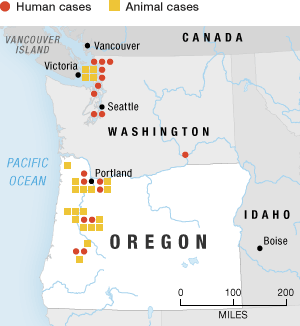
A rare and dangerous fungal infection named Cryptococcus gattii has been quietly spreading from British Columbia southward to the U.S. Pacific Northwest. And it's changing as it goes.

Researchers have discovered that a unique strain of the bug has emerged recently in Oregon and already spread widely there, sickening humans and animals.

. . . Researchers have also been struck by the array of different animals species getting infected. Domestic cats and dogs lead the list, but there have been confirmed reports in sheep, goats and horses, in elk and llamas, even in porpoises and dolphins whose infected corpses have washed up on beaches.

NPR - www.npr.org
23 Aug 2010
R Knox
Photo credit: Public Library of Science/Edmond J. Byrnes III

>>>FULL ARTICLE


Wildlife Health Bulletin #2010-03: White-Nose Syndrome: New Locations in Missouri, Tennessee and Quebec

The USGS National Wildlife Health Center (NWHC) has detected the genetic signature of the fungus Geomyces destructans, the likely cause of white-nose syndrome (WNS), in skin samples collected from little brown bats submitted for testing from a cave in Pike County, Missouri and from White Oak Blowhole Cave in the Great Smoky Mountains National Park.

In addition, the Quebec Minister of Natural Resources has announced that WNS was detected in the Outaouais region of Quebec, and this finding was confirmed by the NWHC.

The Missouri and Great Smoky Mountain National Park sites are currently considered “presumptive positive” for WNS because the fungus was visible on the skin of bats and was confirmed by a molecular test (PCR), but there was no microscopic evidence of clinical fungal infection in the bats examined.

USGS NWHC - www.nwhc.usgs.gov
20 Apr 2010


New brucellosis 'hot spots' found in Yellowstone area

The animal disease brucellosis is emerging in new "hot spots" around Yellowstone National Park, according to new research that could complicate efforts to control transmissions of the disease to cattle.

Feeding grounds where food is left for elk as well as herds of bison inside the park have long been considered the main sources of brucellosis, which causes pregnant animals to abort their young.

But Paul Cross with the U.S. Geological Survey said a third source is now emerging: Blood tests indicate large elk herds living far from the feeding grounds have brucellosis exposure rates ranging from 10 percent to 30 percent.

Salt Lake City Tribune - www.sltrib.com (Source: Associated Press)
24 Apr 2010
M Brown


>>>FULL ARTICLE


Reported Wildlife Mortality Events to the USGS National Wildlife Health Center Updated

USGS and a network of partners across the country work on documenting wildlife mortality events in order to provide timely and accurate information on locations, species and causes of death. This information was updated on April 23, 2010 on the USGS National Wildlife Health Center web page, New and Ongoing Wildlife Mortality Events Nationwide. Quarterly Mortality Reports are also available from this page. These reports go back to 1995.

USGS National Wildlife Health Center
26 Apr 2010
Area: United States


>>>Updated Wildlife Mortality Event Table


OTHER WILDLIFE HEALTH RELATED NEWS
Photo credit: Maricopa.com

WILDLIFE HEALTH RELATED PUBLICATIONS
Browse complete Digest publication library here.

Characterization of a highly pathogenic avian influenza H5N1 clade 2.3.4 virus isolated from a tree sparrow
Virus Res. 2010 Jan;147(1):25-9. Epub 2009 Oct 3.
Q Liu et al.

Aerial Attack Produces Reciprocal Fatal Trauma between Great Horned Owl and Red-Shouldered Hawk
Southeastern Naturalist. 2010; 9(1):179-180
S Boone et al.

Assessment and mitigation processes for disease risks associated with wildlife management and conservation interventions
Vet Rec. 2010 Apr 17;166(16):487-90.
M Hartley and E Gill

Synergistic effects of glyphosate formulation and parasite infection on fish malformations and survival
Journal of Applied Ecology. 2010; 47(2): 498 - 504
DW Kelly et al.

BioTorrents: A File Sharing Service for Scientific Data
PLoS ONE. 2010; 5(4): e10071.
MGI Langille and JA Eisen

OIE Bulletin - 2009
Issue 4