Hello Readers,
Our 2012 fundraising campaign has ended. Thanks to everyone for enduring the campaign messages, for sharing all of your great fundraising ideas, and most importantly, for all your generous contributions. While we did not make our target, the Digest will continue on a more limited basis.
Even though our readership continues to grow (we gained over 500 new readers in 2012!), we will be unable to continue to provide the Digest at the frequency you have enjoyed for the last 6 years. Since losing base support from the National Biological Information Infrastructure in 2010, we must generate support from our community to help keep this important resource online. We will still bring you the latest wildlife disease related news and developments. But, in the near future, we will publish the news issues of the Digest twice a week. In addition, the Wildlife Disease Journal Digest will continue to be published on Wednesdays. Friday’s ‘In the Spotlight’ issues will also continue be published, just not weekly.
We have established a ‘Support Page’ that readers can access at anytime which provides information about options that you or your institution can use to support the Digest and WDIN's other products and services. If you have not made a contribution, look for the option that works best for you and give today!
Support through an Institutional Subscription
Institutions interested in supporting the Digest and other WDIN products and services can review our subscription levels and choose the level that works for you and begin receiving the benefits for signing up. If you use the Digest, please present this option to the person at your institution who is best able to make the commitment to support at this level. Only you can champion the value the Digest provides to you and your work.
Support through a Professional Individual Subscription
A wildlife professional can get an individual subscription through their business account. To begin the process, complete the request form and an invoice will be issued to your organization. You will have the option to pay by check or credit card. Many readers have found this to be a great way to support the Digest as a business expense through their work funds.
Make an Individual Donation
Through the University of Wisconsin Foundation, different giving options are available, including one-time gifts, annual or monthly pledges. Find the one that works for you and donate now. (To mail in your donation, download printable donation form HERE.) Your donation may be tax deductible under the IRS guidelines based on your personal tax situation.
Share Your Funding Ideas
Tell us about upcoming grant requests for proposals and other funding opportunities that you feel match our mission to increase access to wildlife health information and data. Email your ideas to us at digest@wdin.org. If your organization is applying for grant funds and we can be involved with data integration, contact us to discuss possibilities to collaborate on a grant! Check out our other products (link to product list paper) to see if we can help you further in your work in wildlife health.
Send a Letter of Support!
As we apply for grants and other funding opportunities, your testimony about the benefits you gain from WDIN’s products and services are crucial to demonstrating the need for our work to potential funders. Please consider writing a short letter of endorsement for our efforts that we can include as supporting documentation for upcoming opportunities. You can email it to us at digest@wdin.org.
We love keeping you informed!
WDIN Team
Dr. Kurt Sladky
Cris Marsh
Megan Hines
Victoria Szewczyk
February 15, 2013
In the Spotlight: 2012 Funding Campaign - Thank You for All You Did!


December 18, 2012
Professional Individual Subscriptions and 12 Days of the Wildlife Health Event Reporter
Professional Individual Subscriptions Now Available! Sign up and Support the Digest!
 |
| Courtesy of Cartoon Resource |
In an effort to develop donation options that will work for different supports, we are rolling out the latest - the Professional Individual Subscription. This option came about through a suggestion by one our wonderful Digest readers. As a wildlife professional, she wanted a way to support the Digest through her workplace. The Digest is a resource that she has come to use regularly for her work.
Wildlife professionals make up over half of the Digest’s readership. This annual subscription of $40 was designed for the wildlife professional and can potentially raise significant funds towards our goal, but only if our readers use it.
While we are excited to offer this contribution option, we do encourage organizations to consider an Institutional Subscription because of the benefits they will receive such as the promotion of their organization through the Digest. (See benefits chart here).
As an alternative, the Professional Individual Subscription enables an wildlife professional to support the Digest as well as WDIN’s other services and products, but excludes the additional benefits.
For those who have made contributions, THANK YOU! Your generosity is most appreciated! If you haven’t already, consider making a donation today! There are so many ways you can support the Digest and WDIN's other products and services. Click on the option that works best for you and give today!
Support through an Institutional Subscriptions
Institutions interested in supporting the Digest and other WDIN products and services review our subscription levels and choose the level that works for you and begin receiving the benefits for signing up.
Support through a Professional Individual Subscription
Wildlife professional can get an individual subscription through their business account. To begin the process, complete the request form and an invoice will be issued to your organizations. You will have the option to pay by check or credit card.
Make an Individual Donation
Through the University of Wisconsin Foundation, different giving options are available, including one-time gifts, or annual or monthly pledges. Find the one that works for you here and donate now. Your donation is tax deductible and December 31 is almost here!
Share Your Funding Ideas
Tell us about upcoming grant request for proposals and other funding opportunities that you feel match our mission to increase access to wildlife health information and data. Email your ideas to us at digest@wdin.org.
You have come to rely on us to bring you the latest wildlife disease news and developments, and now we are relying on you. Make a contribution today so WDIN can keep delivering the Digest you.
We love keeping you informed!
The WDIN Team
Cris Marsh
Megan Hines
Vicki Szewczyk
Dr. Kurt Sladky
Twelve Days of the Wildlife Health Event Reporter
Day 6: In a Holiday Crisis Santa is on His Own, but in a Wildlife Health Emergency, WHER can Help!
 If Christmas was in peril - like when the Grinch stole Christmas - the Wildlife Health Event Reporter (WHER) couldn’t do much to help save the holiday. We’d have to rely on Santa and the elves to do that. But WHER could be useful when the next wildlife health emergency (e.g. oil spill or avian botulism outbreak) occurs, which unfortunately is inevitable.
 Because WHER is capable of collecting observations about any species, at any place, for any disease, it can be used at a moments notice to record wildlife health sightings related to a specific event. With help from the WHER team, a specific project name within WHER could be established and observations related to the wildlife emergency could be recorded and available under that project name.
Depending on the scale of the emergency, there may be many responders from different groups involved, such as organized volunteer corps, multiple state and/or federal agencies, and non-profit wildlife and/or environmental groups. In the midst of a crisis, WHER keeps things simple - and it is already available! It collects only minimal yet valuable surveillance information and makes that information available across traditional geographic and political boundaries. Centralizing this organized information can help responders manage observations of a wildlife health incident, facilitate effective cross-group communications, and broaden current awareness.
December 6, 2012
Today's Wildlife Disease News Stories

In addition we received contributions from eight individuals - a BIG thank you for your generosity! But the campaign deadline is approaching fast and we still need your help. Consider where else you can find so much wildlife health information in one place that is so easily accessible? Can you give a donation today? Is your organization able to give a donation or sign up for a subscription?
Even though our services, including the Digest, are publicly available and benefit everyone, they do require financial support.The University of Wisconsin-Madison, provides non-financial support in the form of workspace and guidance but does not provide monetary funding.
While the News Digest and our other services help you stay abreast of wildlife disease developments, they also assist and support the valuable work of other wildlife health organizations, such as the Seabird Ecological Assessment Network (SEANET).
From our SEANET fans
We could not do what we do here at SEANET without the support of the Wildlife Data Integration Network (WDIN) at the University of Wisconsin. Our database manager, Megan Hines, is some kind of miracle worker.
And far beyond what they do for us, the WDIN has several invaluable projects going on, many of which I use daily. Their Wildlife Disease News Digest is my daily source for what’s brewing in wildlife populations all over the world. Cris Marsh and company do an incredible job of poring over a huge volume of information and distilling it for readers. As a blogger myself, I have a deep appreciation for what they do. [link to source]
SEANET is a citizen science powered research project based at Tufts University's Cummings School of Veterinary Medicine. Their volunteers survey beaches on the east coast of the United States reporting on seabird mortality and environmental conditions. The wealth of data that is collected is used to identify patterns and causes of seabird mortality in the Atlantic. This surveillance data is also delivered to WDIN's Wildlife Health Event Reporter where it is joined with other observations for a more comprehensive view of wildlife disease occurrences.
Together, we are working with our partners, like SEANET, to better understand wildlife disease. With your support, we can continue to provide the services that you and others have come to value and rely on.
 Contact us today to give a donation, for a subscription or with any questions.
We love keeping you informed!
The WDIN Team
Cris Marsh
Megan Hines
Vicki Szewczyk
Dr. Kurt Sladky
TOP STORIES
Bird Deaths in Russia Are Being Blamed on ‘Low Pathogenic Flu’
The H5N1 avian flu didn’t cause deaths of wild birds in Russia’s southern Krasnodar region last week, the government’s food safety agency said.
Lab tests proved a “low-pathogenic flu,” not H5N1, killed hundreds of wild ducks in coastal lakes in the Anapa and Temryuk districts in the Krasnodar region last week, said Alexei Alekseenko, spokesman for Rosselkhoznadzor.
 ; and Anapa - Map It , Russia
Researchers: What killed catfish in Marco Island
Researchers are trying to determine what killed a cluster of catfish near Marco Island.
The dead catfish surfaced last week. Rookery Bay National Estuarine Research Reserve spokeswoman Renee Wilson says the fish were ghostly white and had reddened lips and fins, a sign that the fish were under some kind of stress.
Researchers haven't said what may have caused the fish kill, but theories range from red tide poisoning to a disease or virus. Tissue samples have been sent to a research institute for further testing, which would take weeks.
] Casey seeks deer farmers' help with chronic wasting disease
Deer and elk farmers in York and across the United States could soon be asked to help the state and federal government monitor chronic wasting disease in their animals.
Saying the disease is the deer equivalent of the mad cow disease, Sen. Bob Casey, D-Pa., is asking the U.S. Department of Agriculture to adopt a rule that calls for monitoring deer and elk that cross state lines.
The USDA issued an interim rule earlier this year, but Casey wants Animal and Plant Health Inspection Service to finalize the rule, under which farmers could volunteer to participate in a process similar to a registry, said John Rizzo, Casey's press secretary.
OTHER WILDLIFE HEALTH RELATED NEWS
- Feds want corals listed as endangered
- First rabid fox in area since 1994 found near Jacksonville [Jacksonville, Oregon, USA - Map It
]
- Pennsylvania Game Commission Urges Participation In Christmas Bird Count
- EcoHealth Alliance Announces Emerging Disease Series In The Lancet [Cited Articles in The Lancet]
- How animals spread diseases to us
- Why Some Strains of Lyme Disease Bacteria Are Common and Others Are Not
- MSU student to use Fulbright for study of disease in Zambian wildlife, livestock
- Coral die-offs hold clues to earthquakes
- Cigarette butts help urban birds ward off mites
- Largest whale's acrobatic ambush [Courtesy of a fellow Digest reader]
November 27, 2012
Today's Wildlife Disease News Stories
The Digest is back from the Holiday break! Did you miss it?
While the Digest was on a brief holiday hiatus, did you miss not having the latest wildlife disease news delivered to you? If so, consider making a contribution. With your support, we can keep on publishing the Digest for everyone's benefit!

Contribution Options
Support through an Institutional Subscriptions
Institutions interested in supporting the Digest and other WDIN products and services can contact us at digest@wdin.org.
Make an Individual Donation
Through the University of Wisconsin Foundation, different giving options are available, including one-time gifts, or annual or monthly pledges. Find the one that works for you here.
Share Your Funding Ideas
Tell us about upcoming grant request for proposals and other funding opportunities that you feel match our mission to increase access to wildlife health information and data. Email your ideas to us at digest@wdin.org.
We love keeping you informed! Help keep us online and delivering the wildlife disease information that you and our community of readers have come to value and rely on.
Sincerely,
The WDIN Team
Cris Marsh
Megan Hines
Vicki Szewczyk
Dr. Kurt Sladky
TOP STORIES
New Strain of Bird Virus Sweeps Across Britain
A new strain of avian pox is taking its toll on garden birds in Britain, reports new research published this week in PLOS ONE.
Scientists from the Zoological Society of London (ZSL), University of Oxford, the British Trust for Ornithology (BTO) and RSPB report on the impact avian pox is having on great tit populations.
Avian pox has been recorded in British bird species such as house sparrows and wood pigeons for a number of years. However, the emergence of a new strain of this viral disease in great tits is causing concern amongst vets and ornithologists.
Wildlife vet Dr Becki Lawson from ZSL says: "Infection leads to warty, tumour-like growths on different parts of a bird's body, particularly on the head around the eyes and beak.
W.Va. turtle die-off linked to ranavirus disease
In July, while walking near a small pond he had built on his farm near Clendenin, Bill Archibald spotted a pair of dead eastern box turtles in the brush.
"I didn't think a whole lot about it at first," Archibald recalled, "but then I noticed other turtles in the same area acting kind of lethargic, with swelling around their eyes, lying in the same spot for days, and I started to wonder what was going on."
... The mysterious deaths, which numbered 26 by the end of the summer, didn't sit well with Archibald, a graduate of the state Division of Natural Resources' Master Naturalist program, who had built the pond to enhance habitat for the frogs, salamanders and turtles living on his land. He emailed Doug Wood, a retired Department of Environmental Protection biologist who teaches several Master Naturalist classes.
... As it turned out, the turtle was infected with ranavirus -- an animal disease known to have caused large localized die-offs, mainly in populations of frogs, salamanders and other amphibians, in 25 states since 1997. In more recent years, the virus is known to have infected scattered populations of box turtles, which are reptiles, in several states.
]Kaua‘i’s coral reefs under attack
A rapidly-spreading coral disease along Kaua‘i’s North Shore may be affecting turtles, fish and even humans, according to a team of scientists.
A year ago, Dr. Greta Aeby, a coral expert with the Hawai‘i Institute of Marine Biology at the University of Hawai‘i, sent out an alert to scientists and divers about a disease affecting corals in Kane‘ohe Bay on O‘ahu.
As it turns out, the disease is similar to that seen on O‘ahu, which is eating the coral at lightning speeds, according to Lilley, who graduated with a degree in biological sciences from California Polytechnic University, San Luis Obispo, in 1980. As the black-colored bacteria moves through the coral, it strips off live tissue, leaving a white, dead skeleton exposed.
“The fascinating part is this disease has gone out of control and could potentially wipe out the reefs,” he said. “We don’t know where this bacteria came from. We don’t know how it spreads.”
OTHER WILDLIFE HEALTH RELATED NEWS
- What is Killing the Bats? [Smithsonian Magazine]
- Virus responsible for Brookville Lake fish kill [Brookville Lake, Indiana, USA - Map It
- Animals are already dissolving in Southern Ocean
- Wildlife data collected at traffic stops
- Wildlife Diseases and Conservation - a one day symposium [Symposium on Wildlife Diseases hosted by Veterinary Association for Wildlife Management and held at The Royal Society of Medicine in London][Video 7 hr: 28 min]
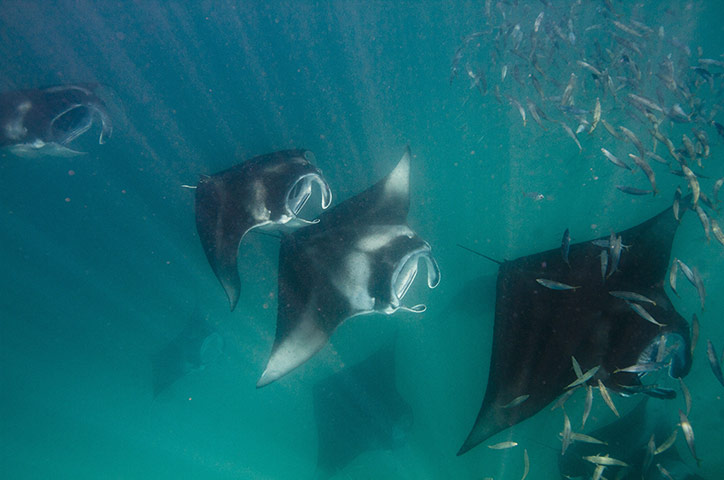 |
| Series of images of manta rays feeding at Hanifaru bay, Baa Atoll, in the Maldives. Photo credit: Ed Brown/Week in Wildlife, The Guardian |
Nature Journal News
- Killing rats is killing birds: Canada and the United States start to restrict the use of blood-thinning rat poison
- How birds are used to monitor pollution: Swallows and homing pigeons do their part for environmental surveillance
- Human drugs make fish flounder: Contraceptives and antidepressants can reduce fish reaction times and reproductive rates
White-nose Syndrome News
- Effort to keep deadly bat fungus out of Black Hills ratchets up [USA]
- White-nose syndrome kills 5.5 million bats in U.S., Canada
- Daily Planet - Artificial Bat Cave [video 6 min: 14 sec]
Canadian Cooperative Wildlife Health Centre Blog - healthywildlife.ca
- Mute swan deaths in St. Catharines caused by enteric parasite
- Potential for American Crows to spread infectious prions in the environment
- Surveillance for Rodent External Parasites at Sheep River Provincial Park, Alberta
- The WildTech Project: At the cutting edge of disease diagnostic technology
Chronic Wasting Disease
- Pennsylvania Game Commission officials to check carcasses for deer disease [Pennsylvania, USA]
- Pennsylvania continues to contain deer disease [Pennsylvania, USA]
- Deer hunters deal with CWD rules [Pennsylvania, USA]
One Health News Corner
- Second coronavirus death reported [Saudi Arabia]
- Zoonotic Diseases Control Office inaugurated [Pakistan]
- The New Map of Science [Nature News]
- Notes from the Field: Hantavirus Pulmonary Syndrome in Visitors to a National Park — Yosemite Valley, California, 2012 [CDC Morbidity and Mortality Weekly Report]
- Growing concerns over 'in the air' transmission of Ebola
Huh?! That's Interesting!
- Paternity tests for 'promiscuous' Hermann's tortoise [Thanks to a fellow Digest reader!]
November 6, 2012
Today's Wildlife Disease News Stories
Dear Digest Readers,
We want to share some good news. Our readership is up! Others are discovering the value the Digest brings to their inbox. Since early October, we have gained over 50 new subscribers bringing our membership total to over 2750!

While our new members are getting acquainted with all the useful information the Digest offers its readers, we are looking to our long-standing readers, some of whom have been reading since 2008, to consider showing their support. Is the Digest worth $1.25 per month for an annual contribution of $15? Maybe more, maybe less? No matter the amount, any contribution is appreciated and gets us that much closer to our goal.
While you think about it, browse the headlines from an issue earlier this week or all the way back to 2006. Skim the latest additions to the event calendar, job/academic opportunities and other professional announcements. Check out the most recent Journal Articles on your preferred research topics, with over 2400 citations related to wildlife disease. Find out where wildlife health events are happening in the news in your neck of the woods.
Sincerely,
The WDIN Team
Cris Marsh
Megan Hines
Vicki Szewczyk
Dr. Kurt Sladky
TOP STORIES
Waterbird die-off hits Lake Michigan
In a dramatic scene along the Lake Michigan shoreline in Schoolcraft County, researchers have recently discovered the carcasses of nearly 700 dead waterbirds, thought to be the victims of Type-E botulism.
Similar large Lake Michigan bird die-offs were recorded in the Upper Peninsula in October 2007 and downstate near Sleeping Bear Dunes National Lakeshore in 2006.
"During two weeks in mid-October, a seven-mile stretch of beach near Gulliver amassed 413 carcasses, including 236 common loons," said Damon McCormick a loon researcher from Common Coast Research and Conservation. "This episode was preceded by a September mortality event that primarily involved horned and red-necked grebes."
Dead birds were intoxicated, an investigation finds
Young blackbirds found dead at a primary school in Cumbria suffered from alcohol poisoning, according to an investigation. Animal health specialists were called to examine a dozen birds found in the playground, many with trauma injuries.
Post-mortem analysis revealed that one of the birds had a large amount of pure alcohol in its liver. Scientists suggest the birds sustained their injuries in flight because they were intoxicated by fermented berries.
Staff from the Animal Health and Veterinary Laboratories Agency (AHVLA) published their results in the Veterinary Record.
Cats new suspect in dolphin deaths
Kitty litter or droppings from ferals threat to endangered Maui's. A new suspect has emerged in the decline of the critically endangered Maui's dolphin - cats.
A parasite traced to cats has been identified as the primary cause of death in seven of 28 Hector's-type dolphins analysed by Massey University scientist Dr Wendi Roe.
Two of three Maui's, autopsied after they washed up dead on beaches, were found to have died primarily from toxoplasmosis, an infection caused by the toxoplasma parasite.
OTHER WILDLIFE HEALTH RELATED NEWS
- Student studies diseases of wild urban rats [Canada]
- Deer in Mower County tests positive for rabies [Minnesota, USA - Map It
- Who brought the flu in? Tough to pin the birds down [India]
- CWD testing gets underway with opening weekend [Minnesota, USA]
- 2012 ASFWB [ Atlantic Society of Fish and Wildlife Biologists] Meeting hosted by CCWHC [CCWHC healthywildlife.ca blog]
- Nevada desert bighorn sheep moved to Utah
- Bat research around Idaho desert caves prepares for disease [Idaho, USA]
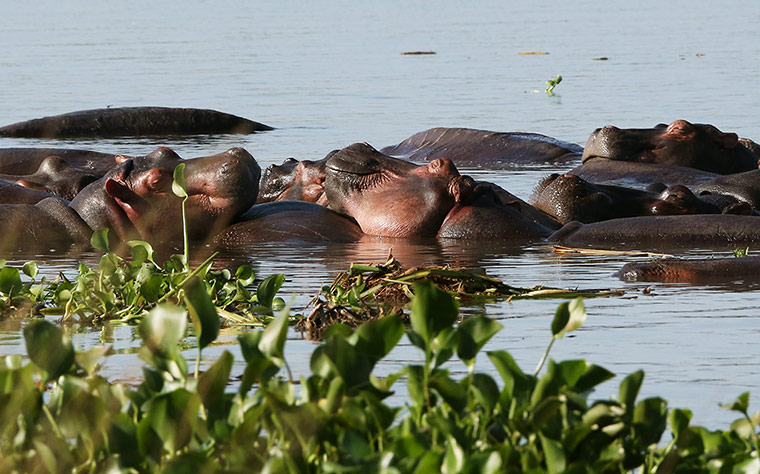 |
| Hippos rest near the bank of the Nile River in the Murchison Falls national park, Uganda. The Guardian's Week in Wildlife Credit: Gernot Hensel/EPA |
- Rare whale's carcass washed up on beach near Kimmeridge [Kimmeridge, England - Map It
- 80 Whales, Dolphins Die After Stranding in Tasmania [Tasmania, Australia - Map It
- Zoonoses diseases: experts underscore need for taking preventive measures
- Tiger Mosquito, Vector of Chikungunya Virus and Dengue Fever, Is More Flighty Than First Thought
- 5 Questions: Forecaster eyes West Nile virus
- Living bird species mapped
- NEW THREE-FINGERED FROG DISCOVERED[The researcher attributes the missing fourth finger to an evolutionary process rather than to an environmental effect]
- The D-Day messenger pigeon reminds us how amazing these animals are
- Sandy blows in rare birds (and brings out the birders)
November 1, 2012
Today's Wildlife Diseases News Stories

We are making our way towards our funding goal of $40,000 by December 31, 2012. To date we have received over $850 in individual donations. A BIG shout out of appreciation to those who have shown your support for the Wildlife Disease News Digest!
In addition to donations, a number of individuals have contributed great funding ideas, which we are pursuing. Many thanks to you! Along with their ideas (please keep them coming!), readers have also sent in some good questions that we felt others might share an interest in.
1) Will you be offering institutional subscriptions options?
Yes, we have a process to accept subscriptions from institutions who are interested in supporting a resource that their wildlife health staff have come to rely on for wildlife disease developments and news.
Please have your institution/organization to contact us at wdin@wdin.org so we can begin the subscription process.
2) Instead of submitting my donation online, can I mail it?
Yes, you can find a printable gift form on the University of Wisconsin Foundation website or download a gift form here.
3) What happens to the donations if WDIN does not make its funding goal?
All funds will be used to keep the Digest going. In meantime, our strategic planning committee continues to explore and pursue many funding opportunities.
Do you find yourself frequently forwarding interesting stories or articles you find on the Digest to friends and colleagues? Or do you find articles/references that you would not readily discover elsewhere? Consider showing your support today with a donation or asking your organization to sponsor the Digest.

Cris Marsh
Megan Hines
Vicki Szewczyk
Dr. Kurt Sladky
TOP STORIES
Hurricane Sandy Aftermath: What Happens to the Birds?
 |
| Rough surf breaks over the storm-battered dunes of Cape May, New Jersey, on October 29. Photograph by Mel Evans, AP |
We talked to Bryan Watts, director of the Center for Conservation Biology in Williamsburg, Virginia, to get a bird's-eye perspective on the disaster....
Are you worried about birds dying?
We have mortality events with these hurricanes, [especially with] birds that are either migrating or in vulnerable situations. Although surprisingly we have tracked several whimbrels with satellite transmitters that have flown directly through these storms. Last fall, we tracked a whimbrel named Chinquapin right into Hurricane Irene that successfully [landed] in the Bahamas.
Local birds tested for neurologic disease
Remember the birds we showed you last week, being treated for feeling the effects of red tide in Southwest Florida? Monday, the state went to Sanibel Island to test the birds.
They want to make sure the birds aren't suffering from a devastating neurologic disease called the Newcastle Disease Virus - or NDV. Both NDV and red tide toxin show similar symptoms.
So FWC's Dan Wolf and CROW Director Dr. Heather Barron teamed up to study nearly 20 double-crested cormorants."More than likely, it's red tide. But we can never be sure and if we have a bird with neurologic signs it would be wrong not to test these," Wolf said.
Most recently in Florida, the disease turned up two years ago in birds near Tampa and St. Petersburg.
Long-billed vulture numbers recover in Pakistan after diclofenac ban
...Populations of the critically endangered long-billed vulture (Gyps indicus) in Pakistan are beginning to recover after the ban of diclofenac, a veterinary drug that is toxic to vultures, a new study shows.
...However a new study by the Peregrine Fund found that by 2008, two years after the ban, breeding populations of the long-billed vulture at study sites in Pakistan had increased by up to 52%.
 Reported Wildlife Mortality Events to the USGS National Wildlife Health Center Updated
USGS and a network of partners across the country work on documenting wildlife mortality events in order to provide timely and accurate information on locations, species and causes of death.
This information was updated on October 26, 2012 on the USGS National Wildlife Health Center web page, New and Ongoing Wildlife Mortality Events Nationwide.
Quarterly Mortality Reports are also available from this page. These reports go back to 1995.
26 Oct 2012
Location:USA
OTHER WILDLIFE HEALTH RELATED NEWS
- Researching Deer Hair Loss Syndrome [CDFG Wildlife Investigation Lab blog]
- CCWHC Graduate Student Researches Parasites of Free-Ranging Lemurs in Madagascar [CCWHC healthywildlife.ca blog]
- Clock Is Ticking On Plum Island Preservation [Infectious disease research facility]
- Honeybees Harbor Antibiotic-Resistance Genes
- White-nose syndrome kills 5.5 million bats in U.S., Canada
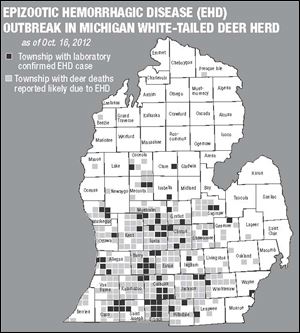 |
| Map of EHD outbreak in Michigan |
- ‘Bird deaths? Inform nearest vets’ [Mysore, India]
- Migratory birds suspects in flu outbreak [India]
- Bird Infected with West Nile Virus Found in San Rafael [Marin Co., California, USA - Map It
- Dead Crow Tests Positive For West Nile Virus [La Jolla, California, USA - Map It
- EHD kills off record number of Mich. white-tail deer in ’12 [See map on right][Michigan, USA]
- Deer disease turns up in Buncombe [Buncombe Co., North Carolina - Map It
- Chronic Wasting Disease Takes Toll on Taxidermists
- Doe escapes chronic wasting disease quarantined pen [Pennsylvania, USA]
- Pennsylvania's chronic wasting disease quarantine list grows to 12 deer farms
- Deer disease worries Ind. officials [Indiana, USA]
- Canary in a data mine: How analytics detects early signs of bio threats
- Viral research faces clampdown: US biosecurity concerns could harm collaboration [Nature News]
- Increases Funding to Combat Influenza and Emerging Disease Threats
- Medical and veterinary scientists fight infectious diseases [Kenya, Africa]
Courtesy of a fellow Digest reader
October 25, 2012
Today's Wildlife Disease News Stories
Do you look forward to starting your day with the Wildlife Disease News Digest? Consider making a contribution. With your support, we can keep on publishing the Digest for everyone's benefit.
Through the University of Wisconsin Foundation, different giving options are available, including one-time gifts, or annual or monthly pledges. Find one that is right for you here.
We love keeping you informed!
The WDIN Team
Cris Marsh
Megan Hines
Vicki Szewczyk
Dr. Kurt Sladky
TOP STORIES
Migratory birds can spread haemorrhagic fever
A type of haemorrhagic fever (Crimean-Congo) that is prevalent in Africa, Asia, and the Balkans has begun to spread to new areas in southern Europe. Now Swedish researchers have shown that migratory birds carrying ticks are the possible source of contagion.
Researchers have now studied the dissemination mechanisms of this potentially fatal disease. The study is multidisciplinary, with bird experts, tick experts, molecular biologists, virologists, and infectious disease physicians from Uppsala University and Uppsala University Hospital in collaboration with colleagues from the Swedish Institute for Communicable Disease Control, Kalmar and Linköping. Ornithologists and volunteers also helped gather birds.
U.Va. Researchers Find Anthrax Can Grow and Reproduce in Soil
Anthrax has the unexpected ability to grow and reproduce while lurking in soil – increasing the deadly bacteria’s chances to infect cattle and other mammals, researchers at the University of Virginia School of Medicine have discovered.
Until now, experts have widely believed that anthrax spores remain dormant in soil until eaten by cattle, then germinate and cause the deadly disease. But U.Va. researchers have found that the spores can attack a common soil and water amoeba, Acanthamoeba castellanii, turning these single-celled organisms into anthrax incubators.
Antibiotic-Resistant Bugs Go Wild
One of the most notorious and hard-to-treat bacteria in humans has been found in wildlife, according to a new study in the Journal of Wildlife Diseases. The researchers isolated methicillin-resistant Staphylococcus aureus (MRSA) in two rabbits and a shorebird. Wild animals may act as an environmental reservoir for the disease from which humans could get infected.
...Now it appears that even animals in the wild can be infected with MRSA. Researchers led by epidemiologist Tara Smith of the University of Iowa's College of Public Health in Iowa City took samples from 114 animals that came into the Wildlife Care Clinic, which rehabilitates injured or orphaned animals, at Iowa State University in Ames. Seven of the animals, or 6.1%, carried S. aureus that was sensitive to methicillin; these included owls, pigeons, a beaver, a heron, and a squirrel. Three animals, or 2.6%, carried MRSA: two Eastern cottontail rabbits and a lesser yellowlegs, a migratory shorebird. (For comparison's sake: An estimated 1.5% of Americans carry MRSA in their noses.)
OTHER WILDLIFE HEALTH RELATED NEWS
- 3 birds test positive for West Nile virus in Simi Valley[Simi Valley, California, USA - Map It
- Beluga whale observed in Montreal: 400km upstream of normal range [CCWHC healthywildlife.ca blog]
- Sweden's only coral reef at risk of dying
- Scientists seek national wildlife conservation network
- BLUE-GREEN ALGAE NOTICES FOR OCT. 12 [Kansas Dept. of Wildlife, Parks and Tourism]
- Badger cull postponed[England]
- Genetic Patterns of Deep-Sea Coral Provide Insights into Evolution of Marine Life: Patterns Also Shed Light on How Environmental Disturbances Affect Aquatic Organisms
- Biologists record increasing amounts of plastic litter in the Arctic deep sea: Studies confirm that twice as much marine debris is lying on the seabed today compared to 10 years ago
- McVeigh stands by decision to close biosecurity lab [Australia]
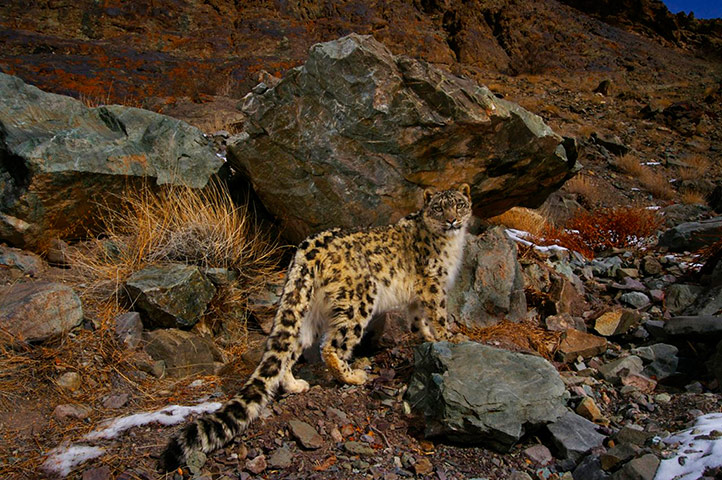 |
| Snow leopard in India's Hemis national park. Photo credit: S Winter/WildPhoto2012/The Guardian |
- White-Nose Syndrome in Bats: Report Signs of Infected Bats
- Bats Still Haunted by Deadly Fungus [USGS Science Features blog]
- Disease blamed for many Indiana deer deaths [Indiana, USA]
- Disease kills 10,400 deer in Michigan, officials say Canadian animals are safe [Michigan, USA and Canada]
- Lafayette College professor studying cause of mad cow, Alzheimer's
- Escaped deer pose risk of spreading disease in Indiana[Indiana, USA]
- Captive deer from CWD-positive farm roaming free [Pennsylvania, USA]
- Rabies cases up in Arkansas [Arkansas, USA]
- Officials study Yosemite workers for clues about hantavirus outbreak [AVMA Aardvarks to Zebras blog]
- The Dog That Was A Canary [Yale Human Animal Medicine blog]
- Webinar to focus on risks of feral hog diseases in Texas [Texas, USA]
- Local Wildlife Is Important in Human Diets in Central Africa, Experts Say
- Planet of the Apes: Viruses use kinship of humans and apes
It Ain't All Bad
October 19, 2012
In the Spotlight: CDFG Wildlife Investigation Lab Blog

 |
| It’s suspected to be the intermediate stage of a tapeworm, known as “cysticercosis”, but this is uncertain. |
Wildlife Investigations Laboratory
Wildlife Investigations Lab (WIL) was established in 1941. Its mission is to investigate, monitor and manage population health issues in California's wildlife. In addition WIL provides expertise, service, training and resources to assist CDFG personnel with wildlife disease issues.
Have An Interesting Resource that Every Wildlife Should Professional Know About?
Know of a invaluable resource (e.g. manual, website, online database) that every wildlife professional should be aware of? Send the title and a link (if available) for this indispensable resource to us at digest@wdin.org, and we will share it with your colleagues on the Digest. In less-than-a-two-minute email you can pass on your knowledge and help a fellow wildlife professional.
Keep the Digest Online!
Through the University of Wisconsin Foundation, different giving options are available, including one-time gifts, or annual or monthly pledges. Find one that works for you here.
Sincerely,
The WDIN Team
Cris Marsh
Megan Hines
Vicki Szewczyk
Dr. Kurt Sladky
>>>DONATE


